
Why Companies Still Hire Engineers: The Layers of Context AI Cannot Know
Former Nvidia and Shopify engineer Lohit Talasila works with Riyadh conglomerates on the question AI makes urgent: what must a system understand about a business before it acts?
A conversation with Lohit Talasila, CEO of ALOH AI, AI Consultant and Software Architect



-
01 / The app builder trap When code becomes cheap, judgment, access, and conviction become the scarce inputs.
-
02 / The unwritten business Automating the documented process can accelerate a failure hidden between its steps.
-
03 / A method that travels Observe how the work actually happens before proposing the system that should change it.
-
04 / Engineering meets entrepreneurship Existing customers and distribution can turn an engineering problem into a company.
-
05 / Teaching Judgment Agents multiply execution after judgment. Responsibility for what ships remains human.
-
06 / Beyond the demo The frontier rewards engineers who build durable capability, not those who merely collect a market.
The bottleneck
Generating software is now a commodity; discovering what a business actually needs is the unautomated work.
The unwritten layer
Every enterprise operating system relies on relationships, exceptions, and risk checks no process document captures.
The upstream frontier
Moving from Silicon Valley capability searching for a problem to building foundational systems in the Gulf.
An AI app builder can generate an internal approval workflow before a product manager has finished their morning coffee. It creates the database, renders the interface, writes the business logic, and schedules notification alerts in thirty seconds. But what happens when the real problem is that nobody in the building agrees on who has the authority to approve?
At Superalignment, this paradox lies at the core of our research. The technology industry has spent the last two years celebrating the collapse of software production costs: an inflection point we call Convergence Programming. Today, frontier AI systems are increasingly adept at structured execution: OpenAI describes AI research interns handling defined tasks under human direction, while hyperscalers are investing heavily to bridge the operational gap, most visibly when AWS announced $1 billion for engineers who work alongside customers to deploy AI in the field. Code generation has become so rapid and accessible that writing syntax is no longer the bottleneck. Anyone can prompt a full-stack application into existence. Yet when these systems enter real organizations, they frequently stall on day one. Not because the code is defective, but because software cannot execute unwritten human agreements it was never taught.
To understand what this transition means on the ground, we spent time with Lohit Talasila, founder and CEO of ALOH AI. A forward-deployed AI consultant and software architect, Talasila previously built systems at Nvidia, Shopify, and Twitter, and served as Chief Technology Officer at Ultrassure. Having recently joined leaders in Riyadh for the 5th Anniversary of LEAP, he is currently embedded inside enterprise conglomerates in Saudi Arabia, building at the exact seam where generative models meet complex, high-stakes human operations.
Talasila’s career illustrates why pure engineering is no longer sufficient. At Nvidia, he observed frontier technology close to the physical silicon. At Shopify, he saw software infrastructure operating at massive global scale. As CTO at Ultrassure, he worked where engineering, product strategy, and commercial margins were tightly joined. That trajectory led to an uncomfortable realization: the most consequential work in artificial intelligence is no longer optimizing code inside an already established Silicon Valley framework. It is operating upstream, where the problem is still ambiguous, the business model has not been validated, and the playbook is still being written.
This is the practical reality of AI Alignment. In public discussions, alignment is often treated as a distant, abstract debate about future superintelligence. In day-to-day enterprise engineering, alignment is immediate: it is the disciplined work of aligning automated capabilities with human judgment, organizational incentives, and operational accountability. When software becomes free to generate, the unspoken context inside human minds becomes the most valuable asset in the room.
01 / The app builder trap
When anyone can build an app, what are they missing?
A team can prompt a full application into existence in an afternoon. It has a schema, an interactive interface, role authentication, and email triggers. It looks complete in a sandbox demo.
Those harder parts are everything software generation cannot do on its own: choosing a problem worth solving, understanding who cares enough to pay, knowing what not to build, earning trust, getting distribution, selling, iterating from real feedback, and staying with the problem long enough for the product to compound.
Anyone can generate code, a dashboard, or a basic workflow in an afternoon. That was the barrier five years ago, but it is not the barrier today. The barrier now is deciding what is actually worth building, whether the underlying economics hold, and whether you can convince real customers to adopt the system.
Talasila often watches teams celebrate building a prototype in a few hours, only to spend the next six months struggling to find a single user who cares. The speed of software generation provides a false sense of progress when the underlying human need has never been validated. What these builders miss is not technical execution; it is commercial clarity, distribution, and the patience to turn code into an enduring product. Building software has become a commodity. Figuring out what to build and making it matter in the real world is where value remains.
Consider what happens when that afternoon prototype meets its first real operating day. A strategic enterprise customer demands an emergency renewal discount. An approver is away from their desk. Two departments disagree on whether gross margins or annual contract value take priority. None of those contingencies appeared in the prompt because none had been settled by the business.
The renewal workflow below is the generated application, laid out as a sliding puzzle: one tile per step of the process document it was built from. Run a routine Najd Freight renewal through it first, then send it the Meridian Holdings exception and watch what a correct implementation of a wrong document does:
The Approval Dilemma
A renewal workflow generated from a client process document is laid out as a three by three sliding puzzle: one tile per step of the document, and one empty square standing for the approver’s single free hour, so a step can only advance when it sits beside that hour. A routine renewal completes in a few moves, which is the generated software working exactly as intended. The exception case is rigged to be one of the configurations that no sequence of permitted steps can reach, because VP approval and Finance sign-off are transposed and the company never wrote down which comes first. No version of the code completes it. The only way through is to stop running it, interview the people who know what actually happens, and get the exception clause written into the specification.
The app builder did not fail at engineering. It generated the exact code requested, from the exact document supplied, and that code was correct. The failure was upstream of the code, in a process nobody had examined, and automating an unexamined process does not fix the business; it only speeds up the breakdown.
02 / The unwritten business
What AI misses about the enterprise in Riyadh
When an enterprise executive hires an AI consultant, the opening request is almost always predictable: “We need an AI agent,” or “We want to automate this workflow.” But as soon as a builder starts asking questions, the true challenge surfaces.
In Riyadh, that unspoken operating system is where the business actually runs: decisions depend on trusted relationships, informal approvals, rapid WhatsApp exchanges, and institutional context that has never been written down in a handbook.
A company can hand over extensive standard operating procedures, architectural schematics, and compliance handbooks, and still omit its most critical operating principles. In many enterprises, an experienced operator makes an unrecorded phone call or exchanges three messages before signing off on a major request. The formal flowchart does not mandate that check. Yet that person knows through years of pattern recognition that a specific combination of customer history and delivery timing signals hidden risk.

If an engineering team eliminates that informal step in the name of modernization, the digital workflow looks clean and instantaneous, but the business quietly becomes fragile. Artificial intelligence sees the workflow that people claim exists; a forward-deployed engineer must discover the workflow people actually use.
That single question shifts the entire engagement. Instead of writing automated wrappers around incomplete documentation, the engineer uncovers who actually owns the decision, what unspoken criteria they evaluate before saying yes, and how the company handles exceptions when standard rules fail.
03 / A method that travels
Resisting the urge to prove understanding too quickly
When an engineer steps into an unfamiliar industry, the immediate instinct is often to demonstrate competence: producing diagrams, proposing architectures, and showing how quickly new technology can be applied. Talasila takes the opposite stance.
Rather than arriving with architectural blueprints or pitching prepackaged models, Talasila begins by finding the operators closest to the frontline. He asks them to walk through how work actually gets done day to day, paying close attention to where their operational reality diverges from the official flowchart.
He experienced this dynamic firsthand while exploring a device financing venture in Zimbabwe. The initial client request sounded straightforward: build a software application capable of remotely locking financed smartphones whenever a customer stopped making payments. On paper, it was an engineering assignment with clear technical specifications.
But the locking mechanism was never the real problem. The fundamental challenge was underwriting risk: how could a credit provider safely serve customers with irregular income, limited formal credit history, and a higher risk of default without making the product too expensive to operate? Once that reality became clear, the entire project pivoted. The work was no longer about a mobile app. It became an investigation into repayment behavior, underwriting indicators, device security, operating costs, and the exact information a lender needed to make better decisions.
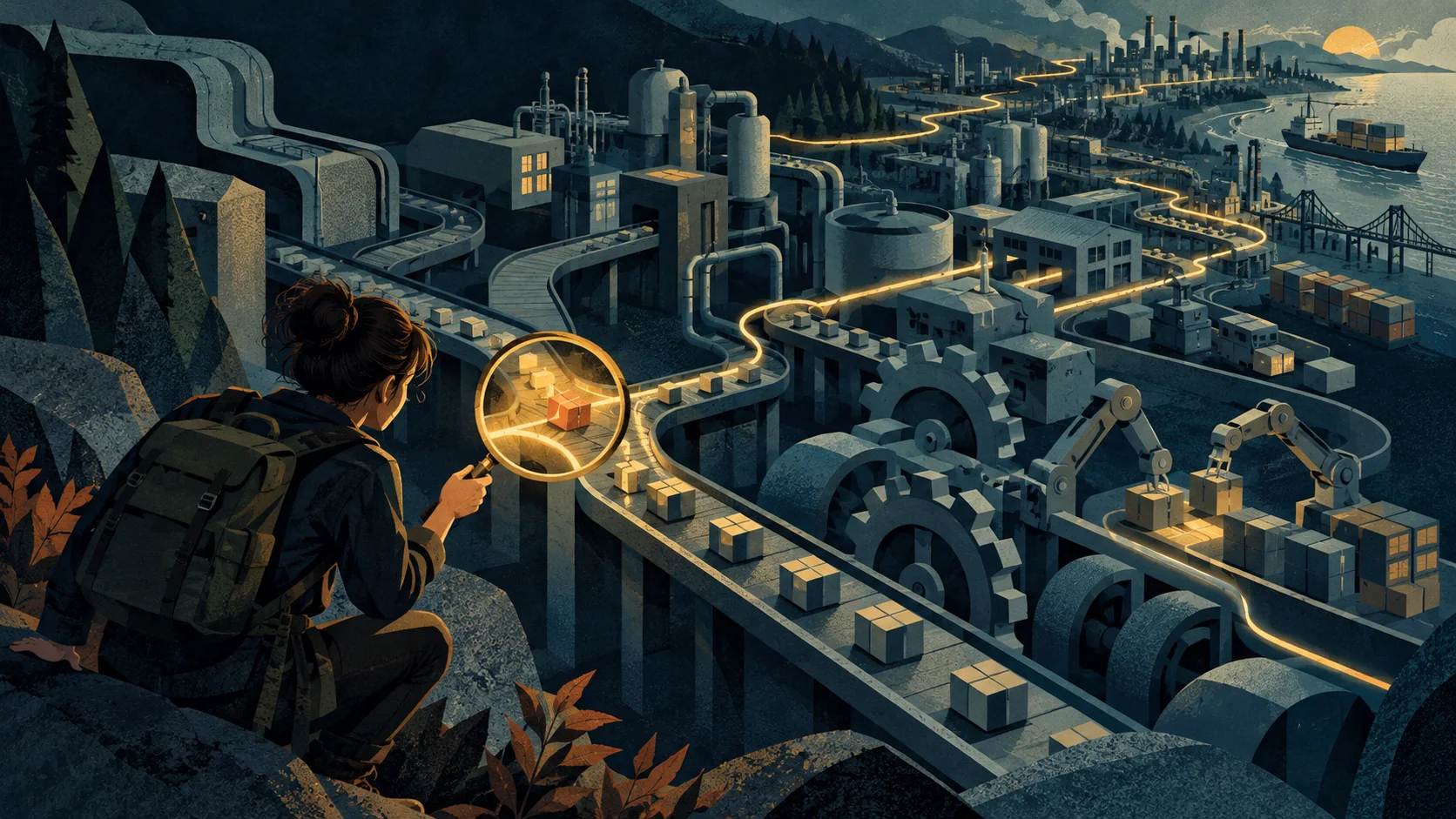
This discipline applies across every vertical: start with the requested software feature, then keep asking what problem sits underneath it, who feels that problem most, and what decisions people are already making manually to manage it. An engineer does not need to become an industry veteran overnight. They need to locate where human judgment lives, translate that judgment into a clearer system, and introduce software only where it demonstrably improves the outcome.
04 / Engineering meets entrepreneurship
Capability forward versus multiplying what exists
Silicon Valley technology companies face a perennial dilemma: brilliant technical teams invent novel capabilities, and then spend years and venture capital searching for customers, distribution, and commercial use cases. In the Gulf, that equation is inverted.
At Nvidia, Talasila experienced what it looks like to work around technology that sits years ahead of the market, powerful enough to unlock entirely new product categories. But in the Gulf, the starting point is reversed. Established enterprises already possess what venture-backed startups spend decades trying to secure: entrenched customer relationships, institutional capital, physical distribution, and deep operating knowledge.
When a regional enterprise asks for an application, an automation pipeline, or an AI agent, the immediate commercial conversation often sounds like a standard software procurement. Yet once an engineer examines the underlying business, the genuine opportunity lies upstream. The problem is rarely a shortage of software; it is that critical operating knowledge is trapped in individual minds, workflows remain fragmented across departments, and high-stakes decisions depend on manual coordination.

This convergence transforms the engineer's role. Rather than manufacturing artificial demand for an abstract capability, the challenge becomes identifying where an established organization's assets can be multiplied by superior software and machine intelligence. Navigating that intersection turns an engineer into a product builder, and ultimately into an entrepreneur.
05 / Teaching Judgment
Interrogating answers without surrendering agency
When artificial intelligence can explain nearly any technical concept instantly, the traditional function of technical education collapses. If an engineer can query a model and receive immediate syntax, explanations, and functional boilerplate, the classroom can no longer be about transferring static information.
Talasila encounters this dynamic firsthand while teaching AI engineering in Riyadh. When students encounter an unfamiliar line of code, they prompt an LLM and receive an immediate, authoritative answer. But receiving a fluent explanation is not the same as understanding what the system actually does, where its input values originate, or whether its conclusions are valid.
During one workshop walking students through an autonomous agent, the code itself was relatively straightforward. The essential instruction lay in the questions the model could not answer for them: what does this state variable actually reference? Where is the environment context created? What unstated assumptions are baked into the system before the agent decides how to act? In an era where models generate code effortlessly, recognizing those hidden premises is far more critical than memorizing syntax.

This is why modern engineering training must pivot from syntax generation to adversarial verification. Students must learn to trace a system from raw input to production output, test its boundary conditions, and articulate precisely why they trust a given result. Artificial intelligence can reliably generate the first draft of an answer; the engineer's enduring responsibility is deciding whether that answer deserves to be deployed into the real world.
06 / Beyond the demo & Vision 2030
First-order impact where the ceiling is still being discovered
Saudi Arabia is navigating one of the most ambitious economic transformations in modern history. Under Vision 2030, the Kingdom is deploying unprecedented capital and national mandate to diversify beyond oil, building entire digital industries, financial networks, and public institutions from the ground up. For engineering leaders and technologists worldwide, this makes Saudi Arabia the defining proving ground for how technology actually takes root at scale.
In Silicon Valley and European hubs, the Gulf has often been viewed as an export market for foreign enterprise licenses and turnkey vendor contracts. But purchasing software from abroad does not build internal muscle. As Talasila emphasizes, an enterprise cannot outsource the operational judgment required to run itself. When code generation becomes cheap and ubiquitous, the durable advantage belongs to organizations that cultivate their own internal muscle: the capacity to diagnose ground-level realities, architect systems that endure, and retain full ownership of the outcomes.
In mature Western technology ecosystems, engineers frequently spend years making fractional optimizations to systems that were designed decades ago. In Saudi Arabia, organizations possess scale, capital, and urgency, yet the foundational digital and intelligence layers are actively being architected. You are not arriving to patch legacy technical debt; you are defining the operating foundations of national institutions.
When Talasila speaks with regional enterprises, their initial inquiry is often narrow: building a discrete mobile application, automating an approval step, or provisioning an AI assistant. But as soon as an engineer investigates how the enterprise genuinely runs, the true opportunity emerges underneath. The real challenge is resolving fragmented decision-making, unlocking institutional knowledge trapped in operational silos, or structuring workflows that were never properly digitized in the first place.

For an ambitious technical builder, that distinction changes everything. Value is no longer measured solely by lines of code produced, but by the ability to translate messy human operations into robust products, infrastructure, and institutional capabilities at massive scale. That is the authentic pitch for Vision 2030: come to build where the ceiling is still being discovered, where technical judgment carries decisive weight, and where an engineer can evolve into a system architect, a product builder, and an entrepreneur.
Operational Framework
Six questions before you automate
-
01
Where does the work actually stall?
Identify the operators carrying the friction and delays, not just the dashboard specification.
-
02
What happens between the documented steps?
Surface informal phone calls, relationship checks, and WhatsApp confirmations before coding them away.
-
03
What problem sits underneath the requested feature?
Look past the locking application to the underlying underwriting economics and customer behavior.
-
04
Are you automating an assumption or an actual process?
Distinguish between the workflow leadership believes exists and what people execute in practice.
-
05
Has ambiguity been resolved before the agent begins writing?
Use AI coding models as force multipliers only after trade-offs, constraints, and metrics are fixed.
-
06
Who retains operational responsibility when the system acts?
Ensure a human operator maintains clear authority to question proposals and handle exceptions.