
Culture · The Matrix
You chose freely. The system chose the menu.
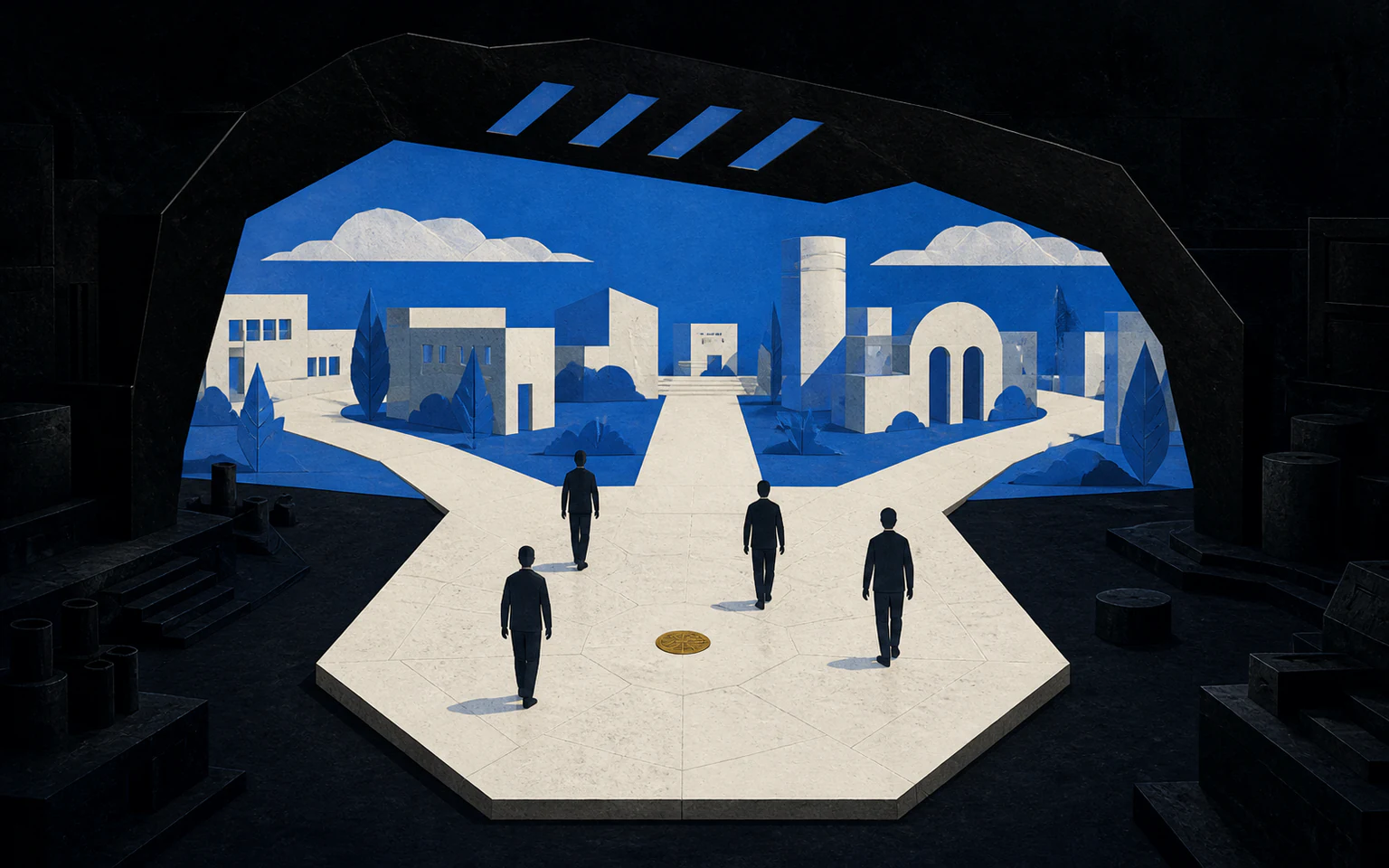

What changes: the camera, the frame, and the available route. No answer is scored.
What this is: an original conceptual game inspired by our reading of the film. It does not reproduce a film scene. Image provenance.
The Matrix made one idea unforgettable: a world can feel complete because the system controls the picture. This short experiment lets you feel what that changes before the explanation arrives.
1999 film · written and directed by the Wachowskis · BFI film record (opens in a new tab)
The idea
The choice was real. The menu was incomplete.
A person can choose without coercion and still begin from a world somebody else arranged. The power sits one step earlier: in deciding which facts, paths, and questions enter the frame.
That is our reading of The Matrix, not a factual claim about every interface or AI system. The film turns mediation into a total simulated world. Real systems are narrower, messier, and often shaped by several institutions at once.
The film
See the world the movie supplied.
The official trailer is the recognition layer. The player and thumbnail remain hosted by Warner Bros. Rewind on YouTube. Our annotations stay outside the player.
Watch how the trailer places a familiar city between digital cues and the film's hidden-world question.
Caption availability is controlled by the provider and may vary by region. No Superalignment transcript has been verified for this external video.
Open on the provider site (opens in a new tab)Media, plot, and rights boundary
The trailer and preview remain on Warner Bros. Rewind's YouTube channel. The oEmbed preview is shown as provided by YouTube without editorial cropping or image filters. A separate credit links to the official source. The media is not relicensed as Superalignment art, and film and promotional-media rights remain with their owners.
Spoiler notice: this guide discusses the film's simulated-world premise, but not its ending or major fights.
How the trick works
First supply the world. Then let people choose inside it.
- 01
The picture
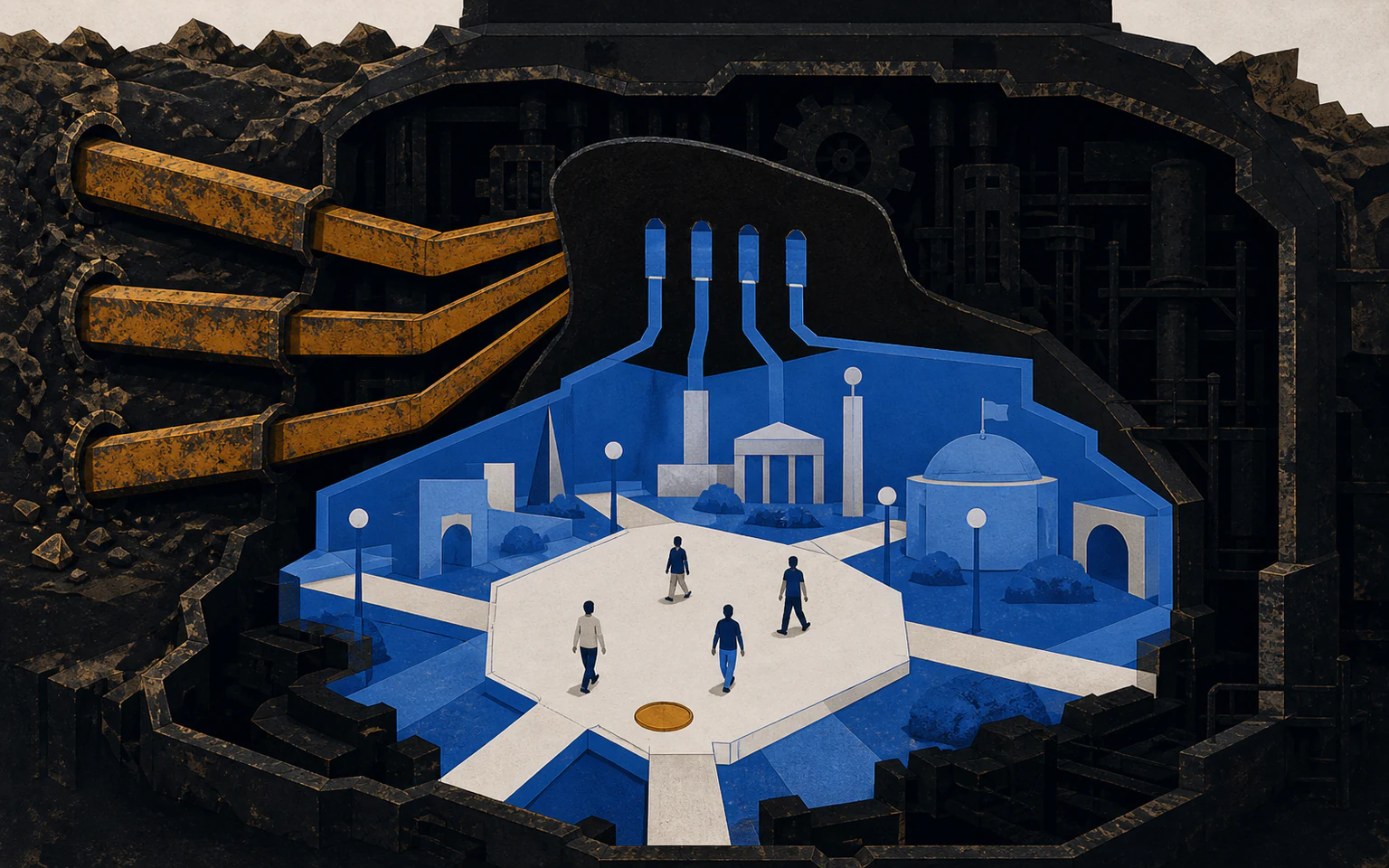
The supplied world contains true, useful things. That is why it feels complete.
- 02
The filter
A hidden process decides which parts of the wider world become visible.
- 03
The second view
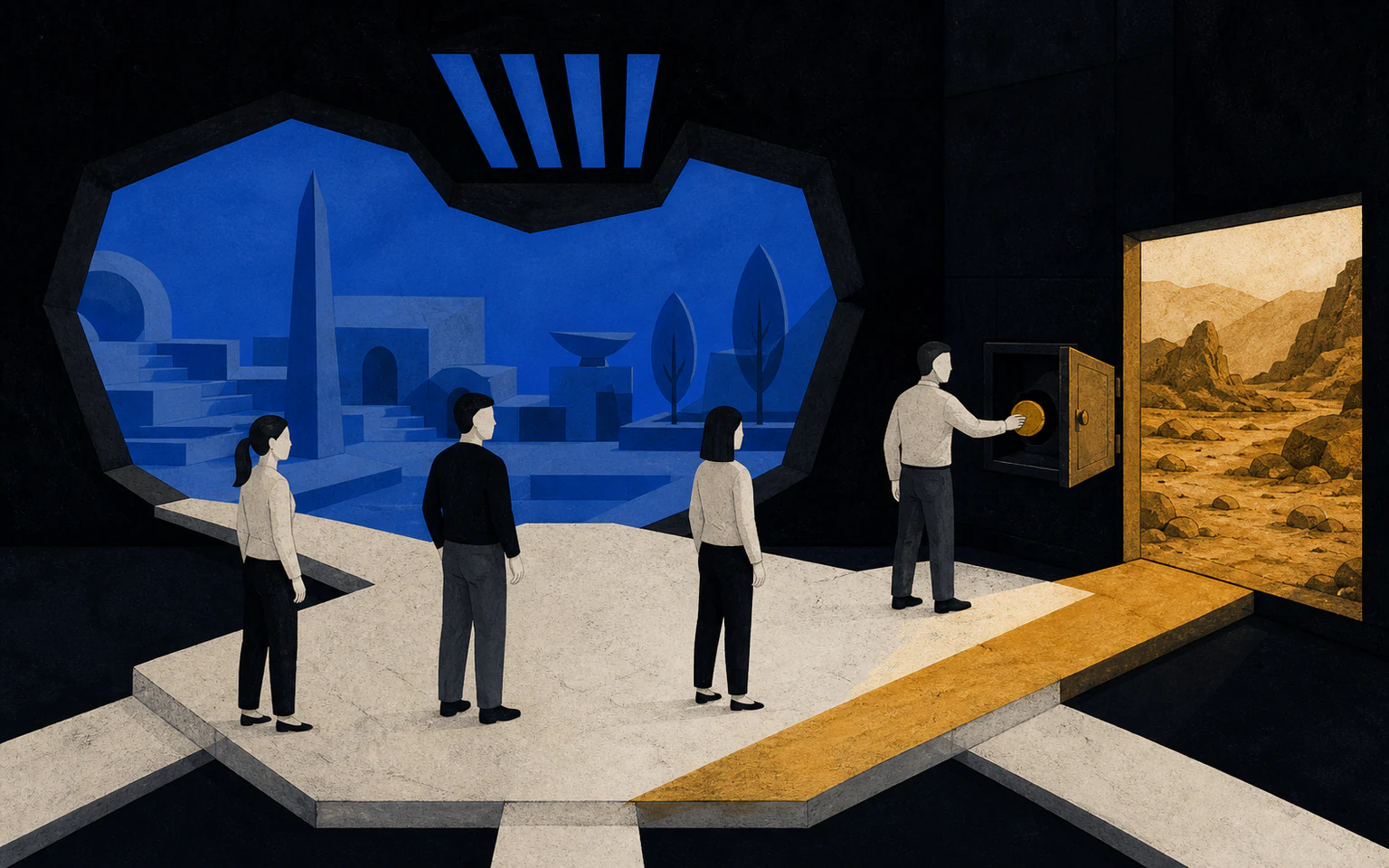
A differently produced view can reveal another path and change the next action.
Where it touches real life
Today, the frame is usually smaller than a world.
Search systems order results so that some answers appear before others. That ordering can be helpful without being complete or neutral. The practical move is not to assume a hidden conspiracy. It is to ask what produced the first view, then seek a second view when the decision matters.
Use the analogy carefully
What the film gets right, and where it breaks.
Keep this
- Control over information can shape a choice before anyone gives a direct order.
- A normal-looking report can still come from a narrow or controlled evidence channel.
- A genuinely independent second view can widen agency when people can compare it and act on it.
Do not import this
- The film makes the hidden world total. Real information systems usually filter only part of what a person can learn.
- The story gives the machines one clear purpose. Real filters emerge from products, incentives, users, and institutions.
- The film turns discovery into one dramatic break. Real evidence checks are slower and can disagree.
Go one level deeper
What if the trusted camera is wrong, but the predictor knows more?
Eliciting latent knowledge asks how to map between an AI's model of the world and a human's model. The Matrix is only an analogy, but it makes the reporting problem easy to remember: the visible channel can be misleading even when a system represents something richer.
Sources and boundaries
Four sources. Four different jobs.
The movie supplies the metaphor. The research and product sources support only the narrower claims beside them.
- 01
Official Media
The Matrix - Official Theatrical Trailer (opens in a new tab)
Warner Bros. Rewind · Official provider media used as the film recognition layer
- 02
Film Identity
The Matrix (1999) (opens in a new tab)
BFI · Authoritative film identity, year, directors, and broad premise record
- 03
Primary Research
ARC's first technical report: Eliciting Latent Knowledge (opens in a new tab)
Alignment Research Center · Primary introduction to the problem of mapping between an AI's model of the world and a human's model
- 04
Provider Guidance
How Google organizes information to find what you are looking for (opens in a new tab)
Google · First-party explanation of how a search system organizes and ranks some results above others
How this page was made and checked
- Interpretation
- Aligned's reading of the film, not a claim about authorial intent.
- Official media
- The trailer stays in Warner Bros. Rewind's YouTube player. No captured frame enters the hero, downloadable art, or social metadata.
- Original art
- Original project artwork generated from project-owned style references. It does not copy a film still, performer, character, costume, set, prop, logo, code-rain motif, pill imagery, or studio artwork. Rights in The Matrix and its promotional media remain with their owners. Inspect provenance.
- Human review
- Named interpretation and applicable media-rights review pending.
- Source check
- Same-family source and trailer checks completed on 2026-08-29. Named human interpretation and applicable media-rights review remain pending.
- AI assistance
- AI assisted source checks, drafting, interaction design, code, and original project image generation. Film media stays inside the official provider player, and sources and boundaries remain visible for review.
- Corrections
- Send a correction