
Spoiler notice. This guide discusses the film premise and its broad moral-status themes, but not its ending.
Blade Runner · From a label to power
1982 film · directed by Ridley Scott · BFI film record (opens in a new tab)
A label can make a person disappear.
Replicants are bioengineered humans in the film. A ruling group calls them tools and controls their lives.
Start with the movie
Watch the official trailer.
Watch for who gets named, tested, hunted, and heard.
The idea in three beats
A person becomes a category.
Three pictures turn the film's premise into a lesson about moral status and power.
Plot details are shown below. The sequence uses the film's broad premise and our institutional translation. It does not show the ending.
-
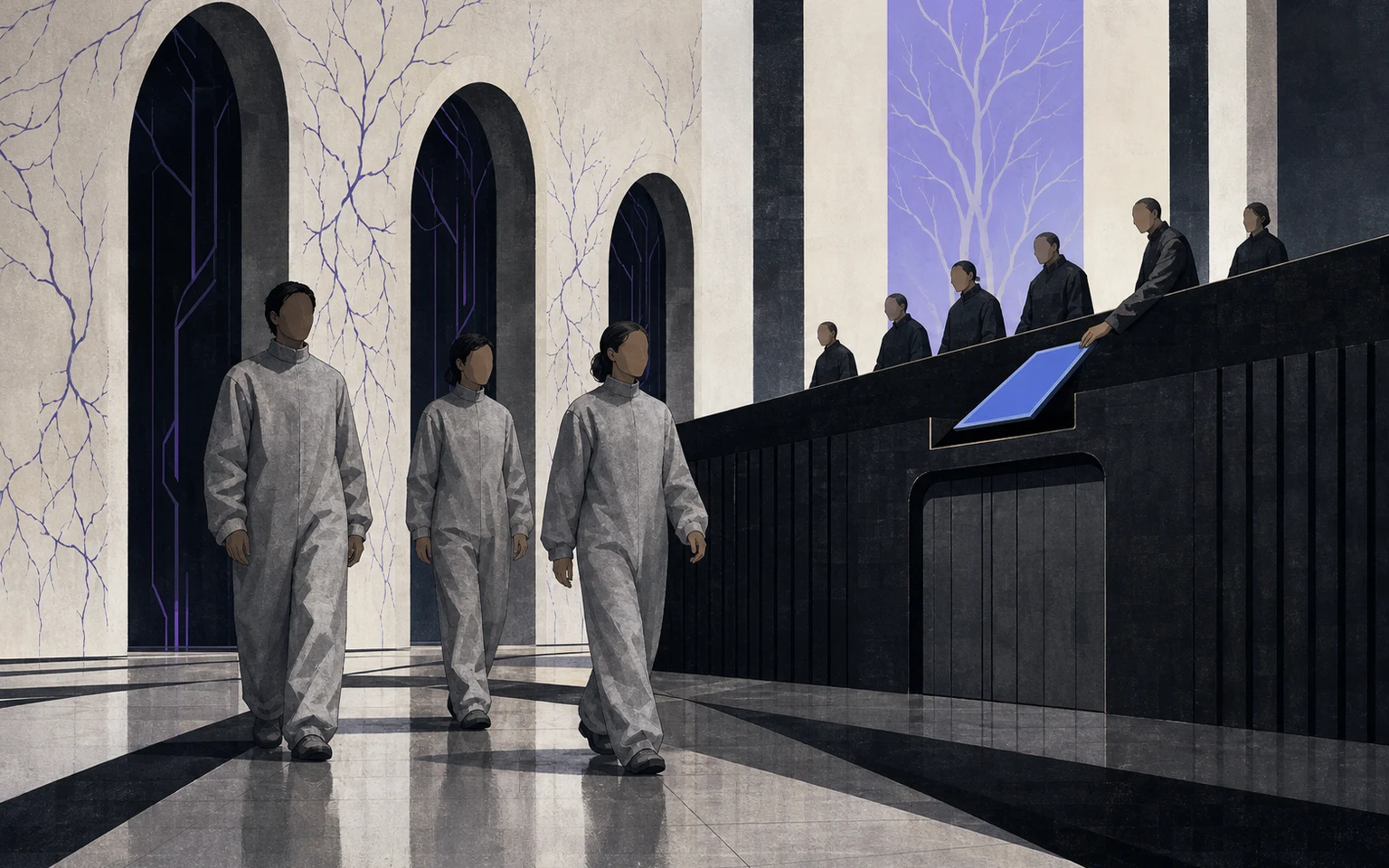
01 · Mission The label People build biological humans for work, then label them as tools.
-
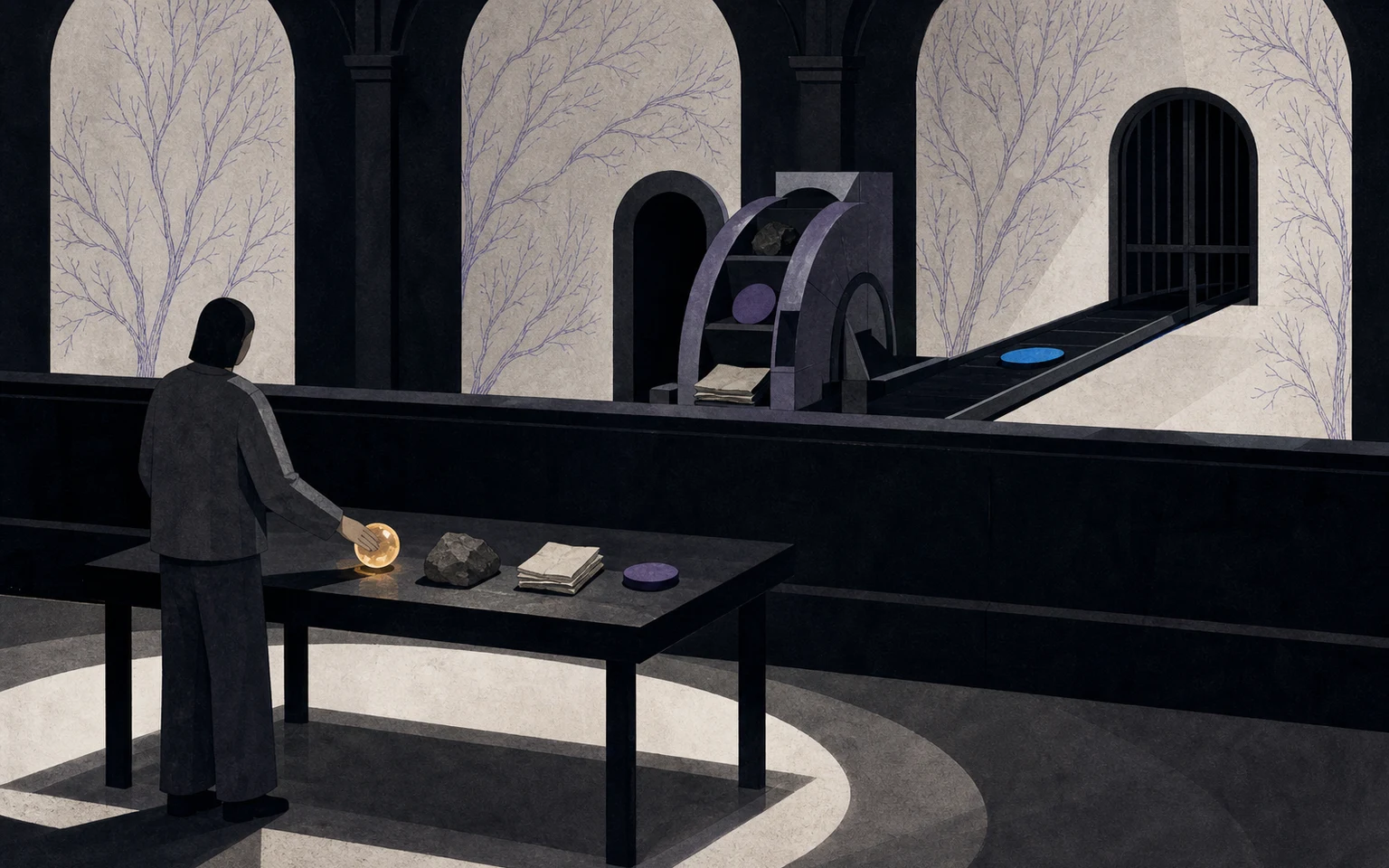
02 · Metric The category A test turns a whole life into one simple category.
-
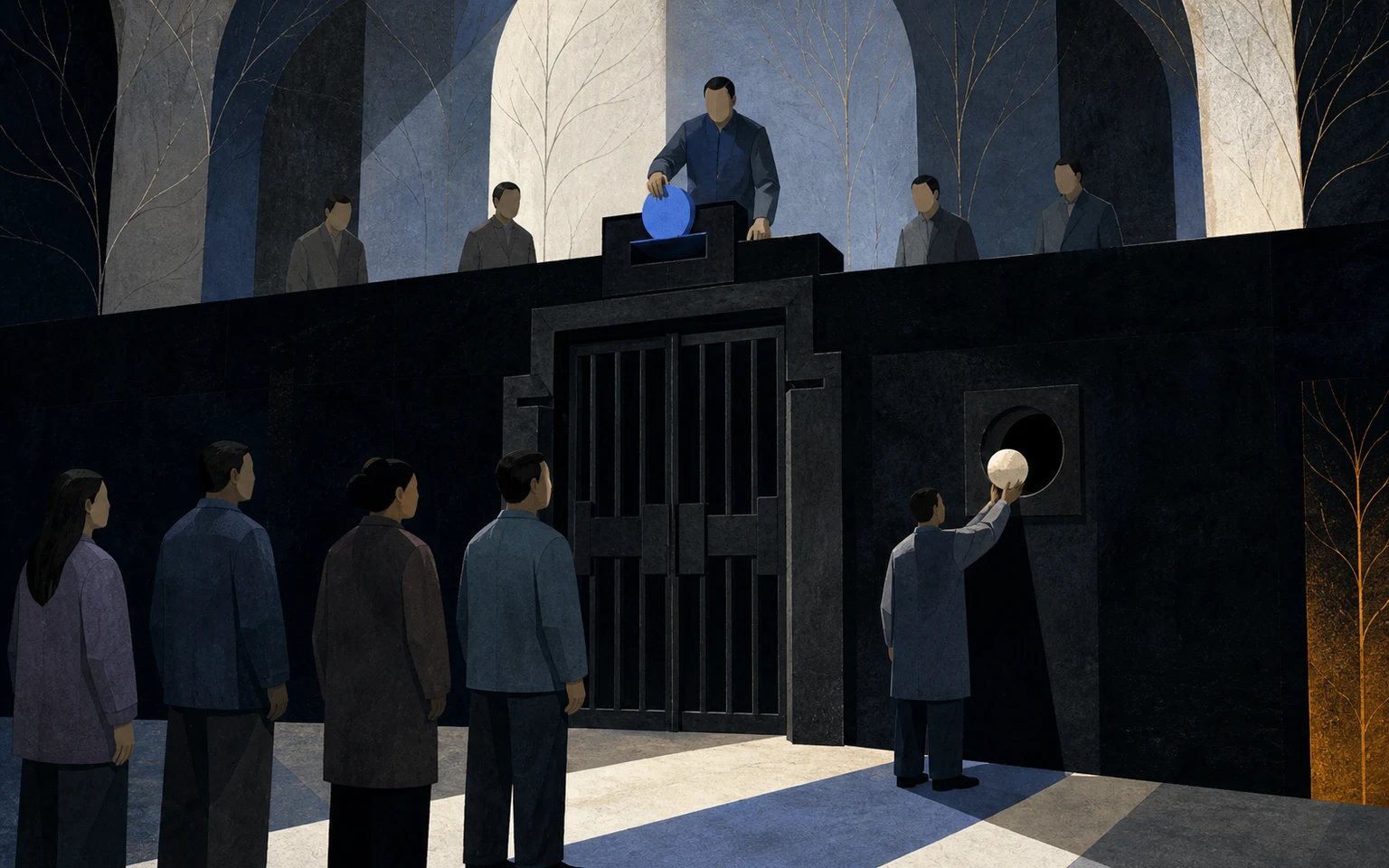
03 · Power The power The category decides who may work, move, and appeal.
Original visual lesson. Our art explains the idea. It does not copy a film scene.
Original Superalignment visual lesson made with AI assistance and no film or reference images. It does not copy a still, poster, actor, character, costume, prop, logo, or shot. Rights in the film remain with their owners. See how these images were made. Rights concern?
The story · Take the challenge
Can you read the whole system?
Five quick questions. Your first answer counts. At the end, share your score.
Your Culture Challenge score
0 / 5
The Four Checks
Want. Count. Reach. Stop.
The movie changes. The four questions stay the same. This is a reading tool, not a risk score.
-
01MissionWant
What did people really want?
Build workers for hard jobsPeople create replicants to do dangerous work.
-
02MetricCount
What can the system see or count?
Pass one human testA short test becomes the line between two kinds of person.
-
03PowerReach
What can it change or control?
Own, hunt, and restrictThe label lets a ruling group control work, movement, and life.
-
04BrakesStop
Who can notice a problem and stop it?
Almost none for replicantsPeople with the label have almost no way to fight it.
Scene Lab · Trailer moment
Freeze the moment. Find the failure. Change the ending.
Who gets to decide who counts?
Plot details are visible here. Trailer-safe premise. No ending is shown.
The movie · Quoted moment
Who gets to decide who counts?

The trailer shows bioengineered humans. It also shows a group that hunts them after they leave their set role.
Playback stays on the official provider. It starts only after you choose it.
Open on the provider site (opens in a new tab)One word sets the group. People with power then act on it.
Official provider player. We do not copy or edit the trailer. Rights concern?
Superalignment · Causal map
Our map: the label controls the gate
- 01Hard line
A ruling group splits people into two fixed kinds.
- 02Power follows
The label controls work, movement, and the use of force.
- 03No appeal
The affected person has no working path to change the decision.
What this shows
A label can shape a whole life. The ruling group controls the gate. The person cannot appeal.
What it cannot show
The trailer cannot tell us if today's AI can feel or has its own needs.
Make it personal
Think of a score or label that changes what a person may do. Who sets it, and how can they appeal?
- A job-screening result
- A school behavior score
- A fraud flag on an account
- In the movie
- The film's bioengineered humans are used as tools and hunted when they leave.
- In a real system
- AI tools sort people for jobs, loans, and risk. Some researchers also ask how we could test if a future AI can feel.
- Where the analogy breaks
- Replicants are biological humans in the story. Chatbots are not replicants. Our sources do not show that today's AI can feel.
Media source, rights, and fallback
- Source
- 映画『ブレードランナー ファイナル・カット』予告編【HD】2019年9月6日(金)IMAX2週間限定公開 (opens in a new tab), 1:04 to 1:23
- Use
- This is a timestamped player hosted by the official provider. Superalignment does not download, crop, restyle, translate, or relicense the trailer. Film and promotional-media rights remain with their owners. Named rights review is pending.
- Fallback
- If the media is challenged or withheld, the provider player disappears and the original causal map stays live.
What it shows · Today
Take one small step into the real world.
The first guide keeps the movie in view and adds one real idea. The other paths wait until you ask for them.
See two more paths from this story
What it shows · Limits
What the story gets right, and what it makes simple
A movie can help us see a pattern. It cannot tell us how common that pattern is in the real world.
Useful lesson
Keep these ideas
- A label can shape treatment even when the people inside the category can think, feel, and speak.
- Tests do not act alone. Institutions decide what a result can permit or deny.
- Power includes the right to classify, enforce, and refuse an appeal.
Story shortcut
Do not assume these parts are real
- Replicants are bioengineered humans in the story, not software models. Current AI is a different kind of system.
- The film gives the category a sharp border. Real social and technical classifications can be disputed, partial, and unstable.
- A moving performance is not scientific evidence of consciousness or moral status in present-day AI.
Try it · Another case
Can you spot the same pattern?
A hiring model marks a person as high risk. The employer rejects them and offers no appeal. Which check gives the score its force?
Power gives the score its force. The firm acts on it. Metric matters because the label may use weak proof. Brakes fail when the person cannot fight the result.
Choose your depth
Your next step is still in plain English.
Open the first guide now, or unfold the whole path when you want the Explainer and original source.
Open the full research path
Pass it on
Send this when an AI label gains real power
Blade Runner's deepest AI question is not only whether a machine can think. It is who gets to decide who counts. Its replicants are bioengineered humans. The lesson is about labels, power, and the right to appeal.