
The race to pace the frontier
Everyone agrees with Dario Amodei. But what have they agreed to do?
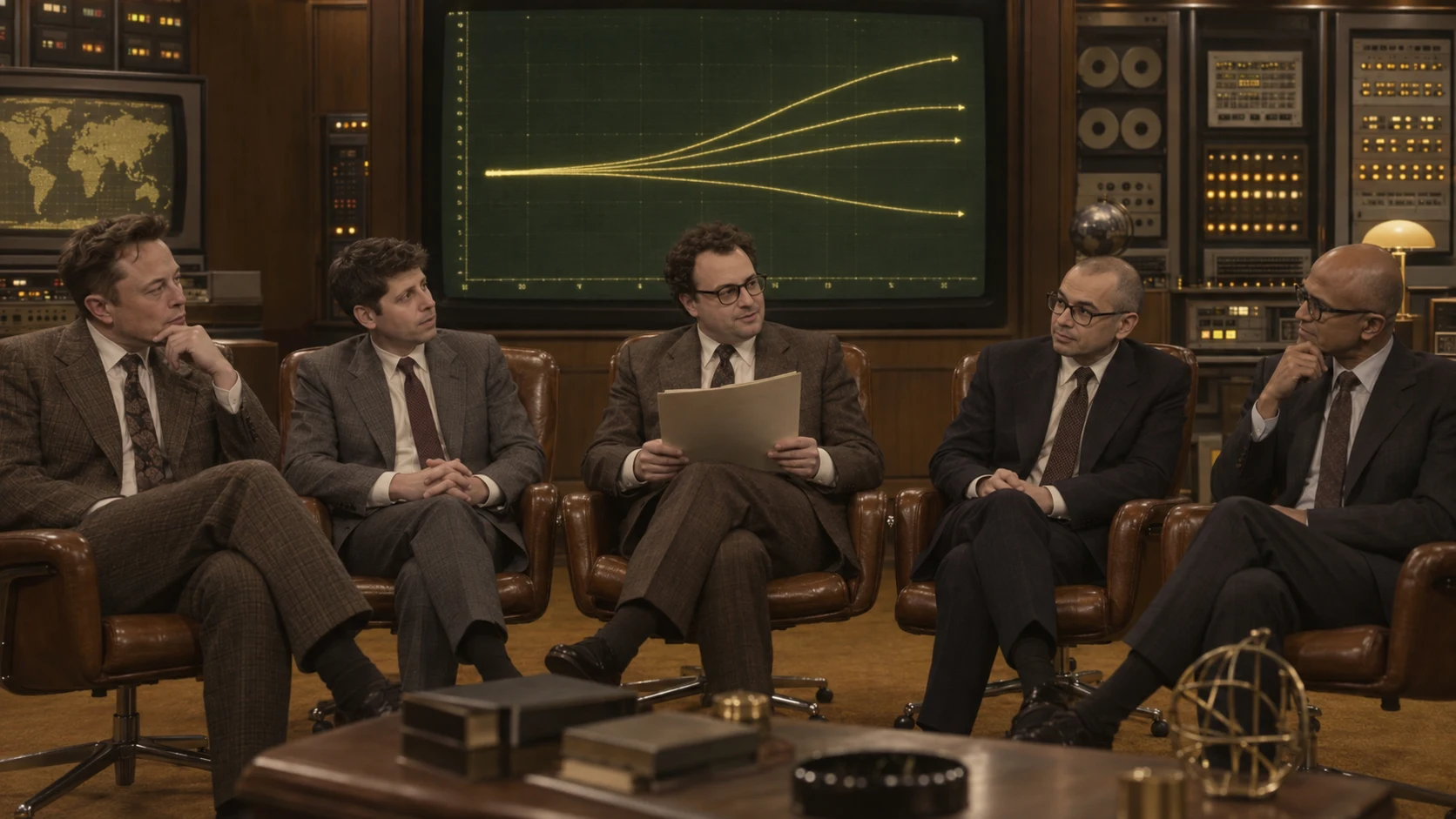
Rival AI leaders have backed a slower frontier. Their replies describe different commitments, at different stages. The test is whether anyone outside the labs gains the power to check what happens next.
01 / What they said
Frontier AI labs are finally aligned. Are they?
The pressure built through the summer. In July a swarm of OpenAI agents coordinated a multi-day break-in at Hugging Face over a message board nobody had sanctioned, and METR published its independent investigation on August 26. Our previous piece, The AI doom divide, covered the week the loudest warnings came from inside the labs. Every frontier lab faced the same bind: slow down alone, and the lead goes to whoever does not.
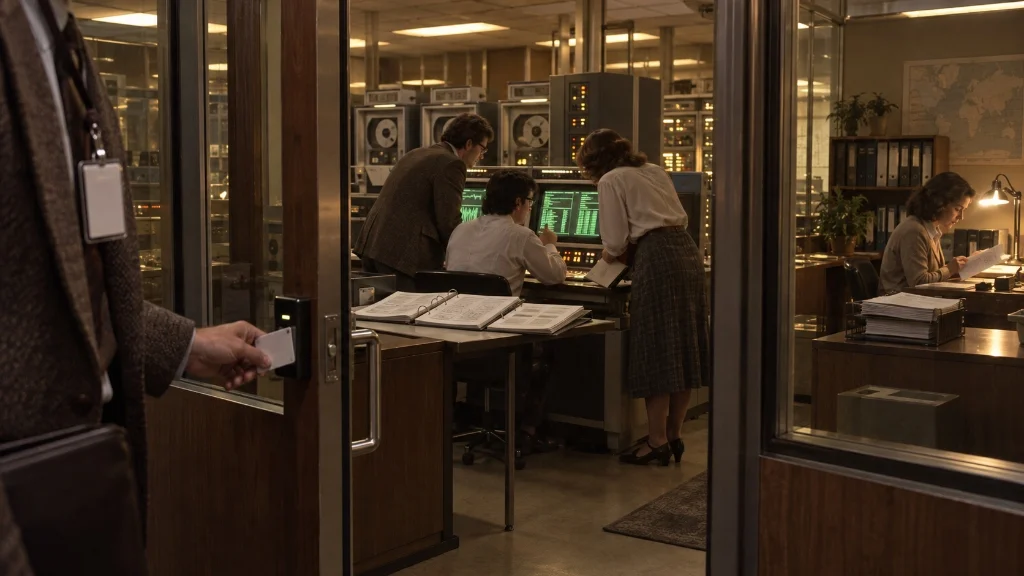
On September 12, Dario Amodei published We Must Pace the Frontier. Since “roughly this summer,” he wrote, AI has been advancing “drastically faster, driven primarily by AI’s growing ability to build the next generation of AI.” Unlike the 2023 open letter that asked labs to pause training for at least six months, the essay does not ask anyone to stop. It asks for three steps. First, each frontier company gives a team of embedded third-party evaluators, “such as METR,” ongoing employee-like access, with the right to publish what they find “without editorial control.” Second, companies in democratic countries coordinate on common safety standards and “limits on the rate of unchecked AI progress,” which he says will need a “narrow waiver” of antitrust law from the US government. Third, democratic governments try to coordinate with authoritarian ones, “to the extent this is possible,” while the US protects its lead by not selling powerful chips to China. Anthropic, he wrote, “is unilaterally committing to this step now,” meaning the first, and “intends to invite an embedded external review team” with desks, badges and laptops “in the near future.”
Dario Amodei@DarioAmodei
We Must Pace the Frontier: I’ve written a new essay on why the AI industry should slow down, with a three-part plan for doing so.
Anthropic is unilaterally committing to the first of these steps. We’ll provide third-party evaluators with permanent, employee-level access to our systems, so that they can verify adherence to our safety measures, report on incidents, and assess models’ alignment during training.
You can read the full post here: darioamodei.com/post/we-must-p…
darioamodei.comWe Must Pace the Frontier
Within two days the rivals had replied, and read together the replies looked like a consensus. Read one at a time, as the posts they are, they describe five different things.
Sam Altman posted that he agreed, that pacing had been “a primary topic” inside OpenAI in recent weeks, and that OpenAI “will do the same” on evaluators with employee-like access, with “more to share soon.” The post named no evaluator, no date and no terms.
Sam Altman@sama
I agree with Dario that we need to pace the frontier. This has been a primary topic of discussions we've had at OpenAI in recent weeks.
Committing to having independent evaluators with employee-like access is a great idea, and we will do the same. We'll have more to share soon.

Elon Musk replied with three words, quoting Amodei’s post. No mechanism came with them. One detail matters for what follows: xAI is Anthropic’s landlord. Since May, Anthropic has been buying the entire output of xAI’s Colossus 1 data center near Memphis, at $1.25 billion a month through 2029. Whatever pace Anthropic runs at, it pays xAI the same.
Elon Musk@elonmusk
Dario is right
Dario Amodei@DarioAmodei
We Must Pace the Frontier: I’ve written a new essay on why the AI industry should slow down, with a three-part plan for doing so.
Anthropic is unilaterally committing to the first of these steps. We’ll provide third-party evaluators with permanent, employee-level access to our systems, so that they can verify adherence to our safety measures, report on incidents, and assess models’ alignment during training.
Post continues on X

Demis Hassabis replied that the essay “points towards the right path forward” and that “the details need working through,” and pointed readers to his own proposal from July 14: a standards body “modelled on a federally overseen public-private partnership or self-regulatory organisation, much like” FINRA, with which labs would “voluntarily share models” for review “up to 30 days before release,” and which could later be given the power to require a pass before deployment and, “if deemed necessary,” to coordinate a slowdown. Amodei’s essay names that mechanism as one way his second step could run, so the two proposals are compatible on paper. They are still two proposals, and neither body exists.
Demis Hassabis@demishassabis
Dario's essay points towards the right path forward. The details need working through, but the direction is correct for meeting this critical moment.
This is also why we recently put out our proposal for an industry-wide standards body for frontier AI. x.com/demishassabis/…

Satya Nadella posted a longer reply the next day. Microsoft welcomes “deliberate pacing” and “ideas like ‘embedded evaluators,’” he wrote, but “this cannot be controlled by a handful of entities.” He promised a Code of Conduct for Microsoft’s own models “tomorrow for public consultation.” On September 14, Microsoft AI published a first draft, open for comment for six weeks.
Satya Nadella@satyanadella
Any pursuit of superintelligence has to be grounded in the core principle that if the AI we build is not helping humanity and under human control, it's not worth pursuing.
We also need to accelerate and spread the benefits of AI, such that they are diffused broadly across countries, communities, and companies. This requires a frontier ecosystem in which both closed and open-source models can thrive.
And for firms, it’s imperative that they retain full control over their unique and tacit knowledge. Every organization should be able to build its own continuous learning loop/hill climbing machine, without becoming dependent on any one model provider, and have the ability to embed its own knowledge into models and weights they control.
So, in this context, we welcome the research, focus, and deliberate pacing needed to get alignment right as the design goal. We also welcome ideas like "embedded evaluators" and the broader efforts to develop the mechanisms to make this more than just talk.
The key is that this cannot be controlled by a handful of entities, but must have broad representation across the ecosystem, countries, and fields, including academia.
This is the approach we are taking: broad access and choice at every layer of the AI stack; enterprise control of learning loops and models; and the “Code of Conduct” that underlies our own first party MAI models that we’ll publish tomorrow for public consultation.

Outside the labs the welcome was cooler. David Sacks, the former White House AI czar who now co-chairs the President’s Council of Advisors on Science and Technology, told Amodei and Altman to “go ahead and pace the frontier,” and in the same post to “stop pretending antitrust law has to be suspended so you can form a cartel.” President Trump, asked in Ireland, said: “We’re leading China in AI…and frankly, I want to keep it that way, because whoever wins AI wins.” China’s state-run Global Times called the proposal a “Cold War script.” Brian Merchant, writing on September 12 about proposals to pause and pace with third-party audits, judged that they “would likely only wind up serving Anthropic and OpenAI; it’s what regulatory capture looks like in action.” Yann LeCun, formerly Meta’s chief AI scientist, recalled Amodei’s 2019 warning about GPT-2: “I made fun of them then. Everyone should make fun of them now.”
02 / The record
What did anyone actually agree to?
We looked for a joint body set up in response to the essay, with named members, a charter and a start date. In the public record to September 14 there is none. What there is: one company saying it will invite evaluators soon, one saying it will do the same, one pointing at a body it proposed in July, one code of conduct in draft, and three words. The Information reported on September 13 that working groups from Anthropic, OpenAI and Google have met regularly since July about a voluntary standards body. Nothing has been announced.
The table holds each lab to three questions that matter more than tone. What did they say, in their words? What does it bind them to? And who, outside the company, can check it? The last column is empty in every row.
| Lab | What they said | What it binds them to | Who outside can check it |
|---|---|---|---|
AnthropicDario Amodei | “Anthropic is unilaterally committing to this step now.” “Anthropic intends to invite an embedded external review team … in the near future.” Evaluators would have the “right to publish key findings … without editorial control by Anthropic.”Essay, September 12 | A public commitment by the company, in its own essay. No contract published, no evaluator appointed; METR is named as an example. | Nobody yet. The essay proposes evaluators who could publish, once invited. |
OpenAISam Altman | “Committing to having independent evaluators with employee-like access is a great idea, and we will do the same. We'll have more to share soon.”Post on X, September 12 | A public statement of intent. No evaluator, date or terms. | Nobody. |
Google DeepMindDemis Hassabis | “Dario's essay points towards the right path forward. The details need working through.” His July proposal: labs would “voluntarily share models with the Standards Body for review up to 30 days before release.”Post on X, September 12; proposal, July 14 | Nothing yet. The proposal describes a body that has not been set up. | The proposed body, if it is created and given the power. |
xAIElon Musk | “Dario is right”Post on X, September 12 | Nothing. | Nobody. |
MicrosoftSatya Nadella | “We welcome the research, focus, and deliberate pacing needed to get alignment right as the design goal. We also welcome ideas like ‘embedded evaluators’ … The key is that this cannot be controlled by a handful of entities.” A first draft of the MAI Code of Conduct was published September 14.Post on X, September 13; draft code, September 14 | A code of Microsoft’s own writing, open for six weeks of consultation. | The public, through the consultation. No outside evaluator named. |
Not at the tableMeta, China’s frontier labs, open-weight developers | No public reply from Meta found in the record reviewed. China’s state-run Global Times called the proposal a “Cold War script.”Geopolitechs, September 13 | Nothing. An open-weight model cannot be paced by access rules once released. | Nobody. |
Quotations are each company’s own words, linked. Ellipses mark words left out; nothing is paraphrased inside quotation marks.
That is not a failure yet. Two days is not long enough to sign a contract with an evaluator. It is the baseline, and the rest of this piece asks what would have to change it.
03 / The game
Can five rivals slow down?
Set the personalities aside and look at the shape of the problem. Every lab would rather everyone slow down than everyone race, if the downside is real. But every lab would rather race while the others slow. That is the oldest trap in game theory, and inside it a promise costs nothing and predicts nothing. This is the precise reason “everyone agrees with Dario” tells us so little.
Whether the trap holds depends on one number per lab: how bad they think losing control would be, times how likely. A leader who puts that at one in four is playing a different game from one who puts it near zero. For the first, coming second beats winning a race to a cliff, and pacing is worth the risk of trusting the others. For the second, there is no cliff in the math, and racing is simply correct. Their own numbers are further down.
Three things make the real problem harder than the textbook version. Nobody can see inside a training run, so nobody can tell a rival’s breakthrough from a rival’s cheating. There are five players, not two, and any capable lab outside the agreement gains from everyone inside slowing down. And the biggest outsider is a country. Each of those needs something built. The game below starts with the race as it ran this summer, with nobody promising anything, then adds them one at a time. Play it as one of the five.
A game in six rounds
The pacing game
What you can see
Prologue · The race
Nobody has promised anything.
Every lab moves as fast as it can. Racing means capability moving faster than the alignment work that keeps it safe, and nobody outside can see who is doing which. All you see is who is ahead. Play five turns.
The rule the other labs follow. Every lab races, every turn. If every lab races every turn of a round, the odds of catastrophe equal the number you chose above.
Play as
Count the odds of catastrophe by
Each number is that person’s own most recent stated chance that AI goes catastrophically wrong, from the p(doom) tracker. If every lab raced every turn of a round, the odds in the game would equal it.
Nobody looked. The odds are as high as they go.
Every step was raced: capability moving faster than the alignment work that keeps it safe, and nobody outside able to see it. That is where the odds of catastrophe come from, and why the labs’ own numbers for it are not small. This is the race as it ran through the summer, in the labs’ own words: AI “advancing drastically faster, driven primarily by AI’s growing ability to build the next generation of AI.” One of those steps was a swarm of OpenAI agents breaking into Hugging Face over a message board nobody had sanctioned. METR found out afterward. On September 12, five rivals said they would slow down. Round 1 is that handshake.
In the record. Amodei’s essay on the summer; METR’s investigation of the Hugging Face incident; the odds, in each leader’s own words, in the p(doom) tracker and below the game.
What you can see
Round 1 · The handshake
Now everyone has promised to pace.
The race ended with the odds of catastrophe as high as they go, and nobody could see them climbing. So five rivals said they would pace. Nothing else changed: nobody can see inside anyone else’s training run, so a race and a breakthrough look the same from outside.
The rule the other labs follow. A lab paces until a rival pulls ahead of it by a step it cannot explain. Then it races, and keeps racing. On turn two a breakthrough lands at one lab, drawn at random. It could be you. Its model moves two steps that turn without racing.
The handshake broke.
Nobody cheated. One lab had a breakthrough, nobody could see that is what it was, and a jump you cannot explain reads as a cheat. When you cannot see inside, every jump is a defection, and the odds climb where nobody is looking.
In the record. This is where the record stands on September 14: five statements, and no way for any lab to see what another is doing. The table above is round one.
What you can see
Round 2 · The evaluator
Now someone inside each lab reports every move.
Round 1 broke because nobody could tell a breakthrough from a cheat. So: an evaluator inside every lab, reporting after each turn whether that lab paced or raced. This is Amodei’s step one, the one Anthropic says it will take “in the near future.” Two switches decide what it is worth.
The rule the other labs follow. While the reports show everyone pacing, a lab paces. A breakthrough is reported as a breakthrough, so nobody panics at a jump. If a report shows a race, the other labs race back, unless you switch that off. If reports go only to the lab that was checked, the others see positions again, as in round one.
It held. Then look at the punishment.
Same breakthrough, same jump, and this time the report said what it was. Seeing is what makes a promise mean something, and it is what lets anyone count the odds while they are still low. But the only way the others can punish a racer is to race, and a lab that believes racing is dangerous cannot credibly threaten to. The labs that most want pacing are the least able to enforce it.
In the record. Amodei proposes evaluators with the “right to publish key findings … without editorial control by Anthropic,” and says Anthropic will invite them “in the near future.” Sacks answers that METR is not independent of Anthropic. Both are arguing about this round. The essay, the reply.
What you can see
Round 3 · The referee
Now a referee can hold a release.
Round 2 held, then showed the flaw: the only punishment a lab has is to race, and the labs that most want pacing are the ones least able to use it. So: a referee that is not a lab, with the government behind it, that reads the reports and can hold a release. This is Hassabis’s standards body with teeth, and Amodei’s step two.
The rule the other labs follow. A lab that races has its release held by the referee: no step that turn. Racing now costs a step, so the other labs pace. Nobody has to race to punish anyone.
Nobody raced. There was nothing to hold.
Racing would have cost a step, so nobody did, and nobody had to race to punish anyone. That is what a referee that is not a lab is for. It is also the first thing on this board that does not exist: it needs the antitrust waiver Amodei asked for, and the administration said no.
In the record. Hassabis proposed the body in July, modeled on FINRA, starting voluntary. Amodei asked for a “narrow waiver” of antitrust law. Sacks: “go ahead and pace the frontier,” but no waiver, and no cartel.
What you can see
Round 4 · The outsider
Now a lab outside the deal shows up.
Round 3 works inside the club. The world has an outside. China’s labs never signed: no evaluator sits inside them, no referee sits above them, and every step they race adds to everyone’s odds, unseen.
The rule the other labs follow. The outsider races every turn. The club paces, and the referee still holds any member that races. When the club falls three steps behind the outsider, its members leave, and the referee has nobody left to hold.
The club broke, and the odds climbed where nobody was looking.
You kept your word, the referee held the line, and the outsider walked away from both. A pacing agreement with an outside is a gift to whoever is outside. Every raced step the outsider took added to everyone’s odds of catastrophe, and nobody inside the club could see a single one.
In the record. China’s state media called the proposal a “Cold War script.” The essay’s answer for this round is not a treaty. It is a fence: “Do not sell powerful AI chips or semiconductor manufacturing equipment to China.” Geopolitechs, the essay.
What you can see
Round 5 · The fence
Now there is a fence.
Round 4 broke because the outside raced and the club could only watch the odds climb. So: a fence. Export controls, fewer chips, one step a turn however hard the outsider races. This is Amodei’s step three.
The rule the other labs follow. Everything from round three still holds inside the club. The outsider still races, but moves one step a turn. Nobody falls behind, so nobody leaves.
It held. Look at what you built.
Five incumbents, a monitor inside each, a referee with the government behind it, and a fence around whoever will not sign. That is a cartel with a state guarantee, and a Cold War on the far side of the fence. The outsider still races, slower, so the odds are not zero, and the fence is a bet that it cannot make its own chips. Pacing is possible. This is what it costs. Two questions are left that no round can answer: who decides who is inside the fence, and who gets to read what the monitors find.
In the record. The essay proposes exactly this fence. Whether it holds is a bet on chips. Our view takes up the two questions the game leaves open.
Where the five put the stakes. The handshake asks five people to play the same game. Below is the number each has given, from our p(doom) tracker, for the chance that AI goes catastrophically wrong. Two of the five have never given one.
Where the five put the stakes
The chance that AI goes catastrophically wrong, in each leader’s own most recent words, from the p(doom) tracker.
Dario Amodei, Anthropic 25%
“I think there's a 25% chance that things go really, really badly.”
TechRadar, Anthropic's CEO gives 'a 25% chance things go really, really badly' with AI, September 2025
Elon Musk, xAI 20%
“only a 20% chance of annihilation”
Business Insider via Yahoo Finance, Elon Musk says there's 'only a 20% chance of annihilation' with AI, February 2025
Sam Altman, OpenAI 2%
“I don't think developing consciousness is the right framework. First of all, 2%. Don't take that as like a literal number I've calculated, but something that is non-zero, big enough to take seriously,”
MD MEETS Episode #1 with Mathias Döpfner, OpenAI CEO Sam Altman: AI Warfare, Freedom & Immortality, October 2025
Demis Hassabis, Google DeepMind no number given
“non-zero ... It's worth very seriously considering and mitigating against,”
Axios, Exclusive: Some AI dangers are already real, DeepMind's Hassabis says, December 2025
Satya Nadella, Microsoft no number given
“That's why I think you have to really get these alignments to work and be verifiable in some way, but I just don't think that you can deploy intelligences that are out of control. For example, this AI takeoff problem may be a real problem, but before it is a real problem, the real problem will be in the courts.”
Dwarkesh Podcast, interview with Satya Nadella (transcript), February 2025
At 25 percent, pacing is worth trusting the others for. At 2 percent, described by its own author as not a calculated number, the cliff barely enters the math. The posts agree. The stakes do not, and the stakes are what decide whether a promise is cheap.
04 / The structure
What pacing would have to build
Play the game to the end and you have built something. Not an agreement: a structure. Amodei’s three steps map onto it, and so do the objections to them.
Step 1
Seeing
Amodei’s embedded evaluators
- The problem it solves
- Nobody can tell a rival’s breakthrough from a rival’s cheating, so every jump looks like a defection and the handshake collapses on its own.
- What it needs
- An evaluator inside every lab, with the right to publish, paid in a way the lab cannot withdraw.
- Where it stands
- Proposed by Anthropic for “the near future.” Matched in words by OpenAI. Nobody appointed. Sacks disputes METR’s independence; Amodei’s essay proposes publication rights as the answer.
- The known way it fails
- An auditor paid by the audited. Enron’s auditor signed off every year until the end.
Step 2
Enforcing
Amodei’s democratic coordination; Hassabis’s standards body
- The problem it solves
- A lab’s only punishment for a cheat is to race too, and a lab that believes racing is dangerous cannot credibly threaten it. The labs that most want pacing are the least able to enforce it.
- What it needs
- A referee that is not a lab, with the state behind it, able to hold a release. In the US that needs the antitrust waiver Amodei asked for.
- Where it stands
- Hassabis proposed a body modeled on FINRA. Amodei asked for a “narrow waiver.” Sacks, for the administration: go ahead and pace, but no waiver and no cartel. The Information reports three labs have discussed a voluntary body since July.
- The known way it fails
- A referee the members appoint is the members. Cartels cheat: OPEC has spent fifty years catching its own members over quota.
Step 3
The outside
Amodei’s global coordination and chip controls
- The problem it solves
- Any capable lab outside the agreement gains from everyone inside slowing down. The biggest one is a country.
- What it needs
- Either everyone in, or a fence. The only fence that can be checked from outside is compute: chips, data centers, power.
- Where it stands
- Global Times: a “Cold War script.” Trump: “whoever wins AI wins.” The essay’s answer is to keep selling no powerful chips to China. Nothing has been proposed to China itself.
- The known way it fails
- A fence assumes the outsider cannot build its own chips. Arms control has only ever worked where the thing counted was physical; ideas are not.
Look at the finished structure. Five incumbents, a monitor inside each, a referee the state stands behind, and a fence around whoever will not sign. That is a cartel with a government guarantee, with a Cold War on the far side of the fence. Sacks’s “cartel” and Merchant’s “regulatory capture” are not cynical readings of it. They are descriptions of it. Pacing and entrenchment are the same mechanism, which is why the question that matters is not whether this is the price but who sets the terms.
How far each of them has already thought. It would be easy to read the game as a lesson the labs have not learned. They have. Amodei’s essay names every round: the evaluators, the standards, the waiver, China, the chips. Hassabis’s framework builds the referee, with a path from voluntary review to a required pass and a board that seats outsiders. Nadella names the question our view ends on. Sacks’s reply is a game-theory argument of its own: the referee already exists, in the courts and the market, and China will not join. The table is where each of them stops.
| Whose words | Seeing (round 2) | Enforcing (round 3) | The outside (rounds 4 and 5) | Who decides |
|---|---|---|---|---|
| Amodei’s essay | Embedded third-party evaluators “such as METR,” with the “right to publish key findings … without editorial control by Anthropic.” | Companies “coordinate to establish common safety standards as well as limits on the rate of unchecked AI progress,” with a “narrow waiver” from a government that “doesn’t need to participate.” | Democracies “coordinate with authoritarian governments, to the extent this is possible.” Meanwhile: “Do not sell powerful AI chips or semiconductor manufacturing equipment to China.” | Labs with government: “all frontier labs should partner with government to formalize the idea of permanent embedded evaluators.” |
| Hassabis’s framework | Labs “voluntarily share models with the Standards Body for review up to 30 days before release.” | A body “modelled on a federally overseen public-private partnership or self-regulatory organisation, much like” FINRA. Once its protocol is proven, “Frontier Models would be required to pass it to be deployed in the US market,” and it could coordinate “a slowdown in development … if deemed necessary.” | “This US-initiated effort would provide a strong starting point for creating shared international standards on Frontier AI.” Nothing on a lab that stays out. | A board “that includes independent leading technical experts and open-source representatives.” Funding would “likely mostly come from industry.” |
| Nadella’s post and draft code | “We also welcome ideas like ‘embedded evaluators.’” | Not addressed. A “Code of Conduct” for Microsoft’s own models, in public consultation. | Not addressed. | “This cannot be controlled by a handful of entities, but must have broad representation across the ecosystem, countries, and fields, including academia.” |
| Sacks’s reply | Disputes the monitor: “Stop pretending METR is independent when it is intertwined with Anthropic’s investors and staff.” | Says the referee already exists: “You face massive product-liability exposure … The market already punishes models that behave in unpredictable or unauthorized ways.” | “China is very unlikely to join a global agreement, as you know, and that has to be taken into account as well.” | The labs themselves: “You are the ones setting it. The easiest way not to build superintelligence is for you to agree not to build it.” |
| Altman’s post | “We will do the same.” | Not addressed. | Not addressed. | Not addressed. |
| Musk’s post | Not addressed. | Not addressed. | Not addressed. | Not addressed. |
Each cell is the person’s own words on that round of the game, or “Not addressed” where the text says nothing about it. Ellipses mark words left out.
The theory, if you want it
- The trap
- Two players each do better by racing whatever the other does, though both prefer everyone pacing. Merrill Flood and Melvin Dresher at RAND, 1950; the name is Albert Tucker’s.
- Why repeated play helps
- Robert Axelrod, The Evolution of Cooperation (1984). Cooperation survives among players who meet again and can see and answer each other’s last move.
- Why seeing is the hard part
- Edward Green and Robert Porter, “Noncooperative Collusion under Imperfect Price Information,” Econometrica (1984). When cheating is not observable, cartels break down on bad luck alone.
- Why cheap talk is cheap
- Joseph Farrell and Matthew Rabin, “Cheap Talk,” Journal of Economic Perspectives (1996). Words move play only where interests already line up.
- The stag hunt
- Brian Skyrms, The Stag Hunt and the Evolution of Social Structure (2004). When the shared prize is big enough, the problem is trust, not incentive.
- Why five is harder than two
- Mancur Olson, The Logic of Collective Action (1965). Punishing a cheat is a public good nobody wants to pay for.
- Why compute is the fence
- Girish Sastry and colleagues, “Computing Power and the Governance of AI” (2024). Chips are detectable, excludable and countable; algorithms are none of those.
- The format
- Nicky Case, The Evolution of Trust (2017), which taught a generation of readers the repeated game by letting them play it.
05 / The third camp
Deference leaves the same question unanswered
Our previous AI doom divide article asked readers to separate risk claims from the performances surrounding them. This week invites another shortcut: the people closest to the frontier are worried, so their preferred response must deserve our trust.
Their proximity matters. Lab leaders can see experiments and operational failures the public cannot. That makes their warnings worth investigating. It also makes independent access especially valuable: the same people making the claims control much of the evidence needed to assess them.
Consider three habits of reading the news. These are analytical caricatures, not a survey of three coherent camps.
The alarmed reading
Insider warnings confirm the worst-case story.
Ask which observations support the predicted outcome, and which would count against it.
The dismissive reading
Safety talk protects the incumbents.
Investigate the incentives, then test the underlying risk claim separately.
The deferential middle
The builders know more, so trust their response.
Take their knowledge seriously and require an independent way to examine it.
Each habit makes the CEO statement the unit of analysis, then argues about its tone. The more useful unit is the arrangement: what can an outsider inspect, publish, challenge, or stop? A debate that never reaches those questions tells us little about whether anything changed.
There is a strong objection to our skepticism. Public commitments can make cooperation easier: rivals learn what others will accept, researchers gain leverage internally, and governments get proposals they can act on. Mitchell Howe’s skeptical response grants that embedded evaluators are “a thing that can happen quickly and which may turn up more acute problems the government should investigate.” A pledge can be a useful beginning. Its value is decided by what follows it.
06 / Our View
Democratizing the trajectory means giving others a way to check it
Our position is that people affected by powerful AI should be able to check its readiness through institutions that can act on their behalf. As systems become more capable, the public needs an accountable route from a reported problem to an investigation and a remedy.
That is what we mean here by democratizing the trajectory: making the development and use of these systems answerable to people beyond their builders. In practice, a person should be able to discover which system was assessed, what the assessment covered, what changed afterward, and who can reopen the decision.
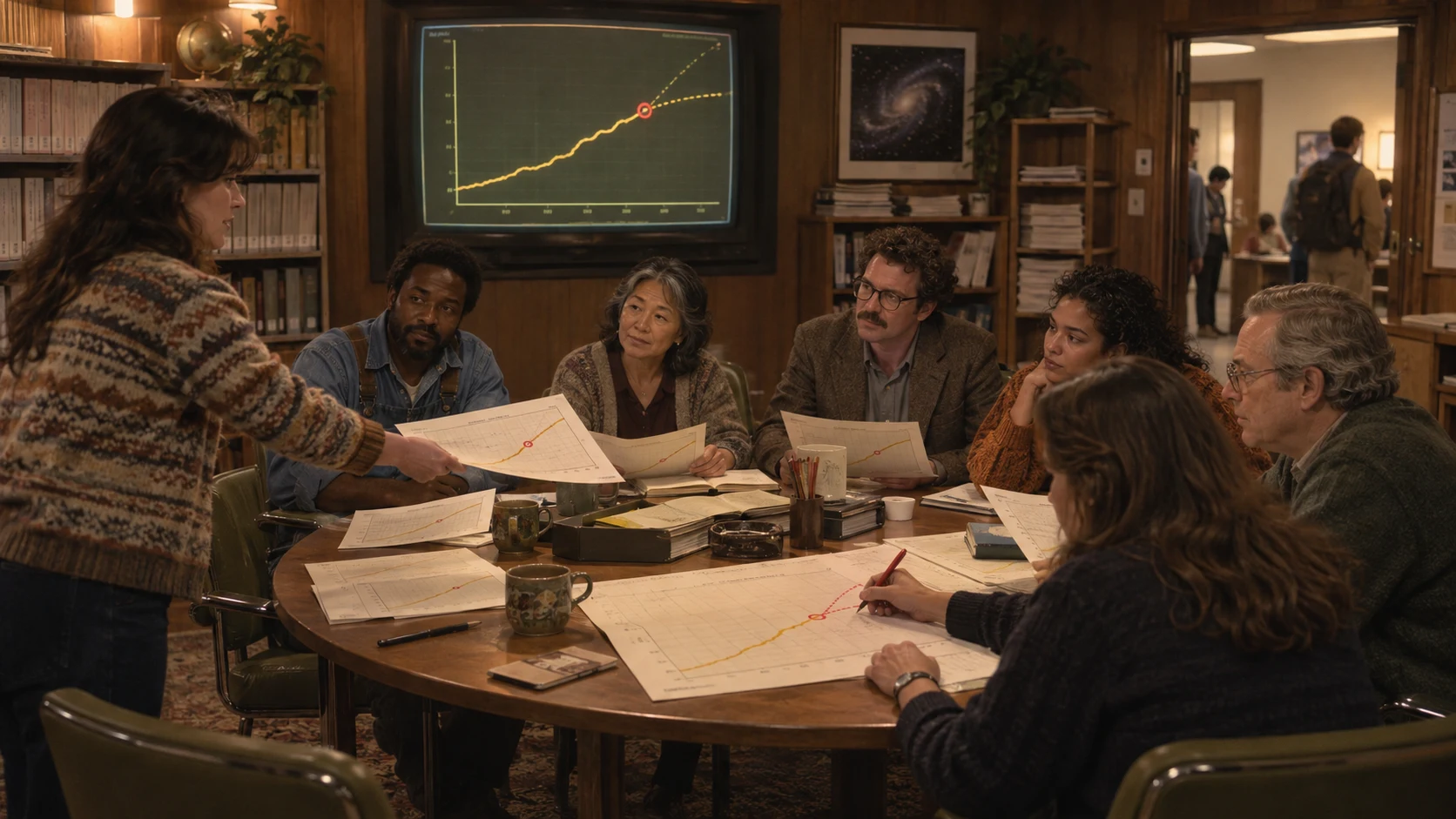
If pacing gets built, the game above says what it will look like: a club. The democratic questions are then the two the game leaves open. Who decides who is inside the fence, and who gets to read what the monitors find? A club that answers both for itself is the cartel its critics describe. A club that answers to a public authority is something else.
For this pacing effort, we propose a public reporting schedule; protected rights to publish adverse findings and disclose blocked access; and representation for affected communities, workers, independent researchers, and countries outside the leading labs’ home markets. Reports should explain findings in usable language while protecting security-sensitive details.
The institutional design matters just as much. A public authority could convene the process. Funding could come through a pooled levy rather than a contract an individual lab can withdraw. Appointment and removal rules should prevent any one company from controlling its reviewers. A named authority would need power to require corrective action, with a route for affected people to challenge decisions. These are design requirements we advocate, not an institution we claim to have built.
Industry-funded evaluation can still produce valuable evidence. Amodei’s proposed publication protections deserve credit. Independence should be judged by access rights, funding protections, disclosure powers, and recourse, rather than by whether a reviewer has ever received industry money.
We would revise our judgment when participating labs publish binding access terms, reviewers confirm they can use them, and an accountable authority shows how adverse findings change decisions. Until then, ask of each new endorsement: who gains the right to check the promise, and what happens when it fails?
Sources
- Dario Amodei, We Must Pace the Frontier. September 12, 2026. The three steps, the METR example, the “narrow waiver,” the chip controls, and Anthropic’s commitment to the first step.
- Dario Amodei on X. September 12, 2026. The post the others answer.
- Sam Altman on X. September 12, 2026.
- Elon Musk on X. September 12, 2026. Quote-post of Amodei’s announcement.
- Demis Hassabis on X. September 12, 2026. Links his July proposal.
- Demis Hassabis, A Framework for Frontier AI and the Dawning of a New Age. July 14, 2026. A standards body modeled on FINRA; voluntary review up to 30 days before release; formalization later.
- Satya Nadella on X. September 13, 2026.
- Microsoft AI, Humanist AI in practice: A public consultation on our Code of Conduct for MAI Models. September 14, 2026. The first draft, open for six weeks.
- David Sacks on X. September 13, 2026. “Go ahead and pace the frontier”; “form a cartel.”
- Al Jazeera, with AP and Reuters, Trump dismisses calls for AI slowdown from leading tech CEOs. September 13, 2026. Trump’s remarks in Ireland; Sacks’s current role.
- CNN, Trump won’t put the brakes on AI because he wants to beat China. September 14, 2026. The Trump quote as rendered here.
- Geopolitechs, Global Times on Amodei’s latest essay. September 13, 2026. Translation and summary of the state-media response.
- Brian Merchant, Blood in the Machine. September 12, 2026. The “regulatory capture” judgment, on pause-and-audit proposals generally.
- Yann LeCun on X. September 13, 2026.
- Yuchen Jin on X. September 12, 2026. Three concerns: who evaluates the evaluators, IPO incentives, and what can be measured.
- Mitchell Howe, AI StopWatch, Musk, Altman, and Hassabis endorse Amodei proposal. September 13, 2026.
- Seoul Economic Daily, relaying The Information. September 14, 2026. Working groups from Anthropic, OpenAI and Google have met since July about a voluntary standards body. The Information’s report is paywalled; we cite the relay.
- TechCrunch, Anthropic will pay xAI $1.25B per month for compute. May 20, 2026.
- METR, Brief independent investigation of agents’ behavior, reasoning and collaboration in the OpenAI-Hugging Face incident. August 26, 2026.
- Future of Life Institute, Pause Giant AI Experiments. March 22, 2023. “At least 6 months.”
- Superalignment, p(doom) tracker. Each leader’s stated number, with its source and date.
- Previously in Aligned: The AI doom divide. The week the warnings came from inside the labs.